Hand Balm vs. Cream: The Day-and-Night Ritual to Banish Dry Skin
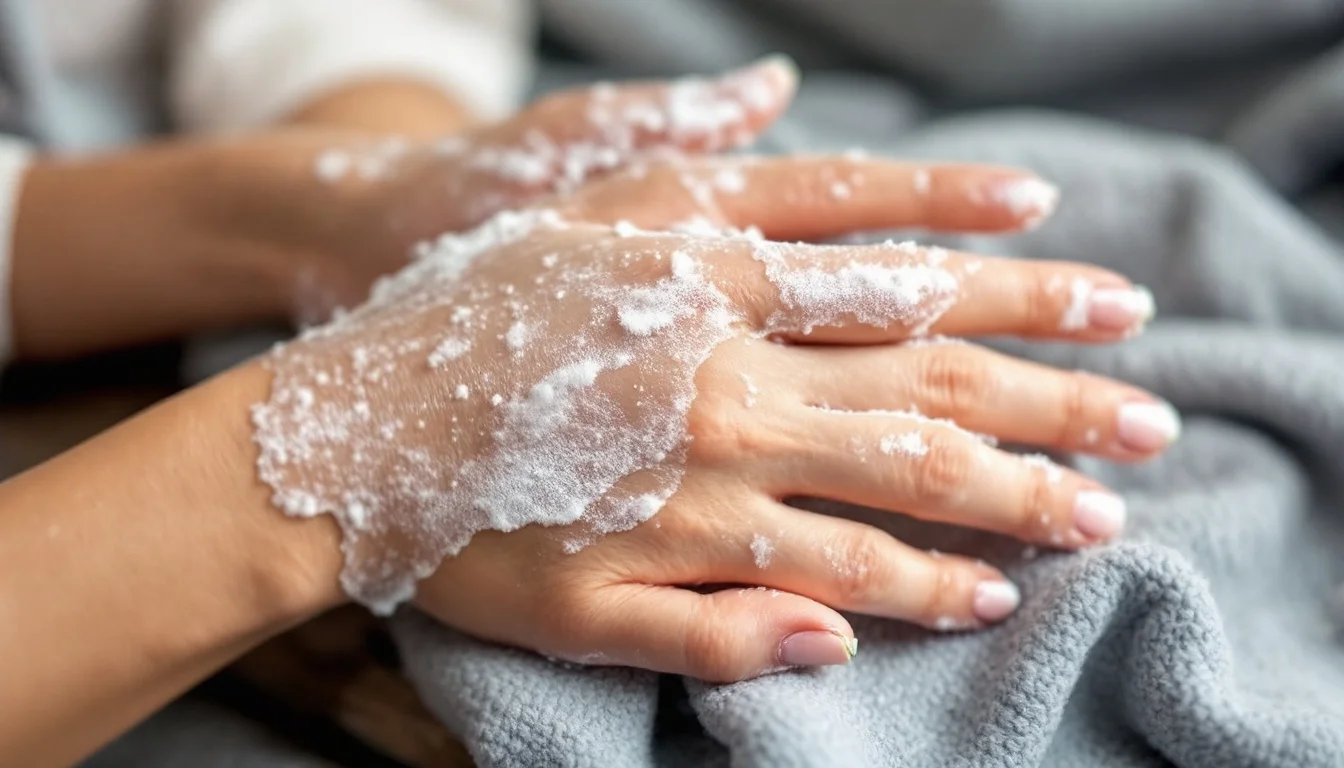
There is something deeply frustrating about applying skincare to your hands only to feel that same persistent tightness just minutes later. Yet this cycle of discomfort is not inevitable, nor does it necessarily mean your usual products are ineffective. The real explanation for this recurring dryness lies in our body's very anatomy.
As the specialized platform Clinikally points out, the backs of our hands have very few sebaceous glands, and our palms have none at all, which explains why they struggle to retain moisture. Unlike the face or back, which benefit from a continuous production of sebum to lubricate and protect the skin, the backs of our hands are biologically defenseless against external aggressors.
Given this natural vulnerability, the solution isn't to search for a single miracle product. The key is to adopt a true day-to-night ritual, recognizing that our skin's needs change between our active daytime hours and our nighttime rest phases.
The essentials in 3 points:
- The skin barrier on the hands is naturally low in sebum, and the palms are completely devoid of it.
- It is recommended to use a lightweight cream during the day and a rich balm at night.
- An effective skincare product ideally combines humectants, occlusives, and ceramides.
Biology and climate: the skin barrier's saboteurs
To understand why specific care is essential, we must first identify the multiple factors that attack our hands daily. Our skin barrier is a fragile balance of lipids and water, designed to prevent external aggressors from penetrating the epidermis.
Mechanical and environmental impacts
Our hands are constantly exposed to the elements. Frequent handwashing, harsh detergents, cold air, and low humidity degrade the skin barrier, leading to tightness, flaking, and sometimes painful cracks. In winter, dropping temperatures reduce moisture levels in the air. The water naturally present in our skin then evaporates much faster into the parched atmosphere.
Daily chemical erosion
Beyond the climate, our modern hygiene habits play a major aggravating role:
- Repeatedly using foaming soaps dissolves the skin's natural oils.
- Applying hand sanitizers dries out the epidermis due to the alcohol content.
- Household detergents can compromise the protective skin barrier.
Every wash with hot water takes a toll on the thin lipid layer. Once this protective barrier is damaged, the skin becomes more permeable. It can no longer retain its own moisture, paving the way for a vicious cycle of deep dehydration that a simple, occasional application of a product is no longer enough to repair.
Balm vs. cream: Putting an end to the debate
Faced with damaged hands, our reflex is often to seek out the thickest product possible, or conversely, to reject rich formulas for fear of a greasy feel. The specialized platform BetterHandz highlights a fundamental concept for rebalancing the skin: creams and balms are not at odds but serve different purposes, with creams providing everyday hydration and balms offering richer, more intensive care.
The cream: your daytime shield
A cream is typically an emulsion with a lighter, fast-absorbing texture, making it easy to apply throughout the day.
This lightweight feel is essential for maintaining consistency in your skincare routine. It allows you to immediately resume your activities—whether that means typing on a keyboard, using a smartphone, or driving—without leaving any unwanted greasy marks.
The balm: your overnight bandage
Conversely, a balm contains a significantly higher proportion of lipids, butters, and waxes, creating a dense texture. This format is typically intended for times when you don't mind leaving a more nourishing product on the skin, such as in the evening or right before bed.
At night, your hands are finally at rest. This is the perfect time to provide them with a thick occlusive layer that will slowly infuse into the epidermis without the risk of being washed off prematurely.
Behind the label: the 3 biochemical pillars of truly effective skincare
Beyond the textural distinction between a balm and a cream, a product's true efficacy lies in its core formulation. For a treatment to sustainably repair damaged skin, it must incorporate a specific biochemical architecture.
An effective hand cream for dry skin combines humectants (urea or glycerin), occlusives (petrolatum, dimethicone) to lock in moisture, and ceramides to rebuild the skin barrier.
The golden trio of hydration
To learn how to read your cosmetics labels (INCI list), look for these three pillars:
- Humectants: Glycerin or urea (which acts as a humectant below 10% and a keratolytic above 10%, generally formulated between 10% and 20%) act like tiny molecular sponges. Their role is to draw water, mainly from the deeper layers of the epidermis, and bind it to the skin's surface.
- Occlusives: Petrolatum or dimethicone form a roof over these sponges. Without them, the water captured by the humectants would simply evaporate upon contact with dry air.
- Ceramides: These are lipids naturally found in the skin that act as the mortar between our skin cells. Applying ceramides topically helps fill the cracks in this protective wall.
Selection criteria
It isn't enough just to have the right ingredients; you also need to avoid irritants. The selection criteria for a dry skin cream include: a fast-absorbing texture with no greasy residue, a formula free of harsh fragrances, and a dermatologically tested product. Fragrances, even natural ones, can contain allergens likely to trigger reactions on an already compromised skin barrier, thereby hindering the repair process.
Morning, night, SOS: which treatment to use when
Understanding ingredients and textures is just the first step. Adopting an application rhythm tailored to your physiology is what will transform uncomfortable hands into healthy, resilient skin.
Consistency over quantity
A common mistake is slathering your hands with an excessive amount of product just once a day, often in the morning, hoping the effects will last. Consistency matters more than intensity: it is far better to apply small amounts frequently than a thick layer just once a day.
Deep overnight repair
To maximize recovery for severely cracked skin, an overnight sealing technique is highly recommended: apply your balm in the evening and, if possible, wear soft cotton gloves to lock in moisture and promote deeper repair.
This method creates a physical barrier on the skin's surface. The cotton fabric increases the penetration of active ingredients through occlusion and maintains a moist microclimate, all while preventing the nourishing balm from rubbing off onto your sheets.
Frequently Asked Questions (FAQ)
Why does my moisturizer sometimes burn when I apply it?
When the skin barrier is severely compromised, applying a product that contains fragrances or certain preservatives can trigger a temporary burning sensation on those raw areas. In this case, it is best to switch to fragrance-free balms until the barrier has healed.
Do I really need to patch test a simple hand cream?
Yes, this is a precautionary step that is all too often overlooked. It is highly recommended to do a patch test before using any new product, especially if you have sensitive skin. Apply a small amount to the inside of your wrist to rule out any risk of an allergic reaction.
Is it helpful to layer a cream and then a balm?
This can be beneficial if the skin is extremely dehydrated. The cream will deliver water and humectants, while the balm, applied on top, acts as a sealant to lock that moisture into the epidermis. That being said, layering isn't strictly necessary: a simpler approach is to give each product its proper place in your routine (cream during the day, balm at night).