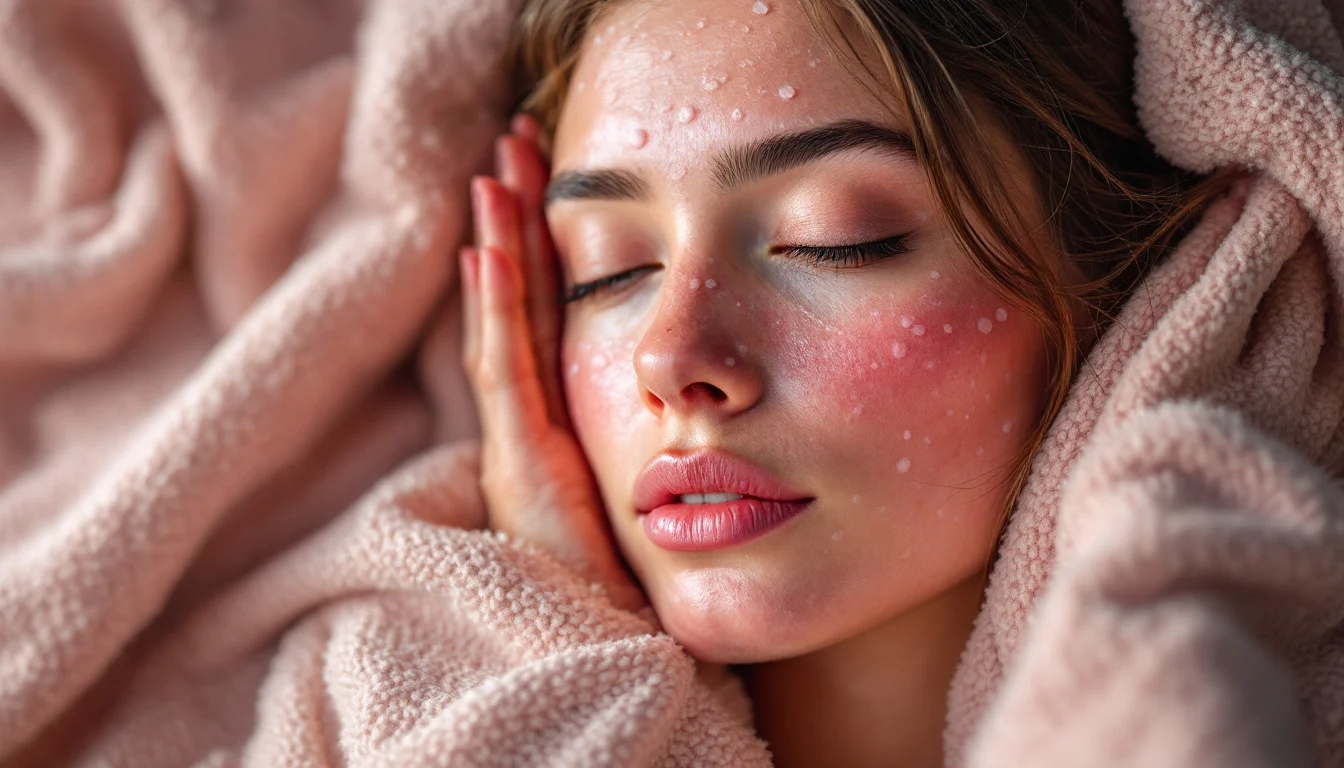
Atopic Skin and Balms: Why a Clinical Approach Beats "All-Natural"

Navigating the drugstore aisles to find a soothing skincare product can often feel like an obstacle course. Faced with endless claims promoting minimalist or nature-inspired formulas, it is perfectly logical to assume that botanical gentleness is the ideal solution to skin discomfort. However, when dealing with truly reactive skin, intuition sometimes clashes with biology.
A restorative approach requires setting aside purely cosmetic promises to focus on cellular mechanisms. Effectively soothing sensitivity requires more than just naturally derived ingredients; it demands a scientifically designed formula aimed at restoring the epidermis's protective shield. To achieve genuine comfort, choosing a balm means moving away from common misconceptions and grounding your routine in rigorous clinical dermatology. In this context, certain botanical extracts—especially essential oils—can actually prove more irritating than soothing on a compromised skin barrier.
Key Takeaways
- Skin fragility is highly physical: it requires repairing the epidermal barrier to prevent moisture evaporation.
- Certain essential oils (lavender, tea tree, peppermint, citrus) used at functional concentrations are packed with sensitizing terpenes and should be avoided on reactive skin.
- Opting for a "fragrance-free" formula is highly recommended (which is different from "unscented").
- Consistency of application is far more important than expecting overnight results: a complete epidermal turnover typically takes about a month in a healthy adult.
- Niacinamide is a synthetic ingredient (vitamin B3), not plant-derived, although it remains fully compatible with vegan formulations.
Understanding Atopic Skin: A Compromised Mechanical Barrier
The Moisture Leak
To properly care for reactive skin, you must first picture its internal architecture. According to a detailed analysis on the Phoilex brand blog in the article "Best Sensitive Skincare Ingredients to Avoid," atopic dermatitis is characterized by a structural weakness in the stratum corneum. In a specific subgroup of cases, this vulnerability is linked to mutations causing a loss of function in the filaggrin gene. This defect makes the skin barrier significantly more permeable: water continuously escapes—a measurable physical phenomenon known as transepidermal water loss (TEWL)—while external irritants easily penetrate.
The Environmental Impact
This structural permeability leaves the skin completely at the mercy of climatic variations. According to an article on the First Aid Beauty blog ("How to Care for Eczema Skin During Different Seasons"), cold weather causes ambient humidity to plummet, accelerating the skin's transepidermal water loss into the dry air. Conversely, rising temperatures also make it difficult to maintain skin balance. Heat triggers sweating, which, combined with salt and friction, can spark intense itching. Therefore, choosing a skincare product should not be seen merely as a cosmetic step, but rather as the creation of an essential lipid shield against the elements.
The "Natural" Trap and the Strategic Avoidance of Allergens
The Botanical Mirage
The current craze for green beauty naturally encourages us to favor balms enriched with plant extracts. However, evidence shows that botanical "gentleness" is not always suitable for a compromised barrier. Cosmetics formulated with natural ingredients can actually contain fragrance allergens at higher concentrations than conventional products. A significant proportion of patients routinely patch-tested for suspected dermatitis react to Fragrance Mix I, the standard indicator for fragrance allergy. Although non-perfume cosmetic products contain relatively low amounts of fragrance compounds (0.1 to 1%, compared to up to 30% in eaux de toilette and perfumes), this allergen load remains highly problematic for a damaged skin barrier.
On reactive skin, it is best to avoid essential oils at functional concentrations—especially lavender, tea tree, peppermint, or citrus—since these extracts are concentrated with highly sensitizing terpenes. The "clean beauty" approach can thus inadvertently expose permeable skin to highly irritating volatile compounds.
The Vocabulary of Labels
Eliminating fragrant substances is your first line of defense. It is highly recommended to exclusively select products with the explicit label "fragrance-free," as any fragrance has the potential to trigger an inflammatory flare-up.
Paying close attention to packaging semantics is crucial. The term "unscented" is absolutely not equivalent to "fragrance-free." In an unscented product, the fragrance has simply been chemically masked to neutralize the odor of raw materials, and these masking molecules can still trigger a flare-up on atopic skin.
Which Label Claims Should You Avoid?
Decoding the INCI list requires a methodical approach. The following table compares common claims with clinical reality to help guide your choices.
| Claim or Ingredient | Clinical Reality (Evidence) | Recommended Action |
|---|---|---|
| "Paraben-Free" | Contrary to popular belief, parabens are among the least sensitizing preservatives used in cosmetics, while phenoxyethanol is generally well-tolerated, albeit with some precautions. Avoiding them is a formulation choice, not a necessity for the skin barrier. | Neutral. A product can safely contain these preservatives. |
| Presence of MI / MCI | Isothiazolinone preservatives (MI/MCI) and formaldehyde releasers dominate contact allergy registries. | Avoid on reactive skin. |
| "Unscented" | This claim means the scent has been chemically masked and can still trigger a flare-up. | Avoid. Look for the strict "Fragrance-free" claim instead. |
What Ingredients Should You Look For in a Balm for Atopic Skin?
The Building-Block Molecules
Once irritating substances are removed from the equation, a balm must provide the building blocks necessary to rebuild the epidermis. It is important to note that several effective plant-derived active ingredients have an excellent level of clinical evidence: the goal is not to shun botanicals entirely, but to avoid the burden of volatile allergens. There is a specific list of high-value ingredients you should look for to help bridge the gaps in the stratum corneum.
Among these allies are plant-derived ceramides, which act as the mortar holding skin cells together, and glycerin, a highly effective humectant capable of drawing and retaining water in the tissues. Shea butter provides a rich lipid supply to lock in moisture. Niacinamide (synthetic vitamin B3, which is not plant-derived but vegan-friendly) soothes redness and supports the skin's natural production of ceramides.
Soothing with Oats
To calm intense itching, one ingredient stands out above the rest. Colloidal oatmeal is a major therapeutic active. This finely milled oat powder deposits a soothing, protective film that relieves tightness and discomfort.
Application Methods and Daily Optimization
Anchoring a Strict Routine
The efficacy of a clinical formula relies heavily on how it is applied. Current dermatological guidelines position the regular use of an emollient as the absolute foundation of daily atopic dermatitis management, even when no visible lesions are present.
The ideal window of opportunity to lock in moisture is incredibly short. It is advisable to apply a moisturizer immediately after showering and as soon as the skin shows any signs of dryness. The importance of texture cannot be overstated either: for atopic skin, it is better to opt for a thick, fragrance-free cream or ointment rather than a lotion, as the latter contains too much water and evaporates far too quickly.
Managing Time and Environment
Tissue repair demands patience. With regular hydration, overall comfort often improves within one to two weeks. However, measurable barrier repair following acute damage takes several days, and a complete epidermal turnover requires roughly a month of consistent care.
Finally, optimization goes beyond cosmetics alone. Using 100% cotton towels and bedsheets can also help reduce flare-ups by minimizing heat retention and nighttime friction.
Frequently Asked Questions (FAQ): Decoding the Drugstore Aisles
Are body lotions suitable for atopic skin?
No. For atopic skin, it is recommended to choose a thick, fragrance-free cream or ointment over a lotion, as lotions contain too much water and evaporate far too quickly.
Conclusion: Moving Towards Preventative Maintenance
Ultimately, managing severe dryness is much like maintaining a delicate architectural structure. Abandoning the quest for "all-natural" in favor of proven, well-tolerated active ingredients—such as shea butter, colloidal oatmeal, and ceramides—whether plant-derived or not, allows you to refocus on what the epidermis fundamentally needs: stable lipids, flawless insulation, and strict avoidance of volatile compounds. By viewing the application of a neutral ointment no longer as a chore, but as essential preventative maintenance, it becomes entirely possible to stabilize skin comfort and confidently face whatever the climate throws your way.
---
The information contained in this article is not a substitute for medical advice. Please consult your doctor or a qualified healthcare professional.