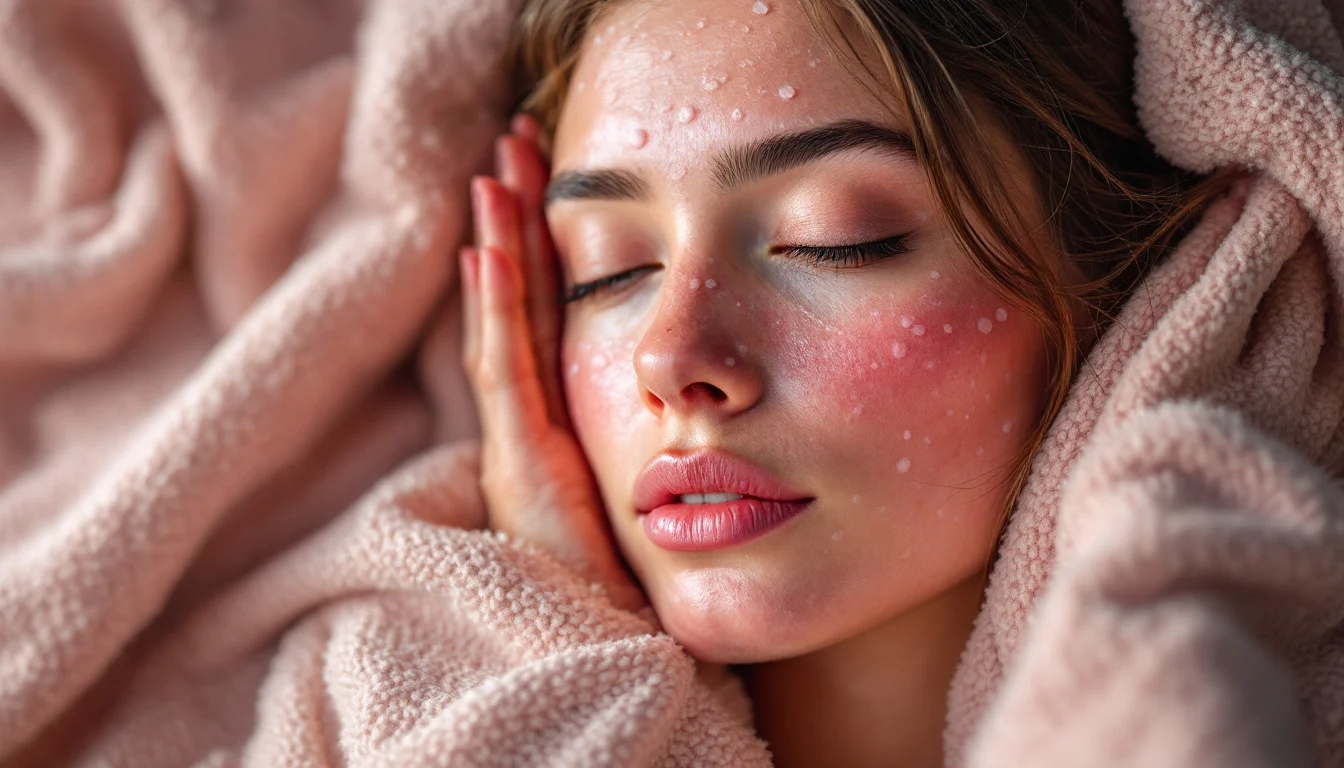
Why Sensitive Skin Becomes Hyper-Reactive in Winter

As temperatures plummet across Belgium and the rest of Western Europe, a familiar phenomenon sets in: your skin feels tight, turns red, and suddenly seems unable to tolerate its usual skincare routine. Faced with this discomfort, the first instinct is often to layer on heavy creams, assuming it is merely surface-level dryness caused by the ambient cold. However, the physiological reality is far more complex.
What we perceive as "dry skin" is actually a symptom of biomechanical weakening. Under the strain of extreme thermal shifts, the epidermis's protective barrier can break down. Winter hyper-reactivity is therefore not just a quirk of temperamental skin, but a direct biological response to a harsh environment. Understanding this mechanism is the key to breaking the vicious cycle of irritation. It is no longer about drowning your skin in an endless array of products, but rather granting it a true cosmetic truce—supporting its natural chronobiology (the skin's biological rhythm in response to environmental changes) until spring returns.
Key Takeaways
- Mechanical weakening: Winter doesn't just dry out the skin; it physically alters its barrier function, increasing vulnerability to allergens.
- The indoor-outdoor shock: The constant shift between freezing outdoor air and indoor heating dries out the environment and accelerates transepidermal water loss (TEWL).
- The trap of overdoing it: Piling on exfoliating acids or cleansers only worsens inflammation in an already compromised skin barrier.
- Symptom vs. emergency: While a feeling of tightness is normal, swollen eyelids or weeping patches always require a medical evaluation.
The biology of discomfort: what happens to the stratum corneum in winter?
To understand why the face becomes so reactive in winter, we have to look at the architecture of the epidermis. The outermost layer, known as the stratum corneum (or horny layer), acts as a shield. The fundamental role of this skin barrier is twofold: to lock vital moisture inside the cells and to protect the body against external environmental aggressors. During winter, this shield faces simultaneous attacks on multiple fronts.
Clinical evidence of disruption
The impact of the climate on this structure is not just in your head. A study published in the Journal of Cosmetic Dermatology has highlighted these disruptions. Crucially, physiological changes were observed in the test subjects. This means that even typically resilient skin has its biological parameters altered by the winter climate.
A physically weakened barrier
When temperatures drop, the skin's ability to defend itself is put to the test. A scientific review published in the Journal of the European Academy of Dermatology and Venereology concluded that low humidity combined with cold temperatures generally impairs the skin's barrier function.
It is no coincidence, then, that redness or tingling suddenly appears. A breach in the stratum corneum leaves the epidermis much more reactive to everyday irritants and allergens. The molecules in your usual skincare products now penetrate too deeply and too quickly, triggering inflammatory warning signals.
The indoor paradox: how your living room is compromising your skin barrier
It is tempting to blame our skincare woes entirely on the cold. However, a significant part of the problem actually happens indoors. Cold air naturally contains less moisture than warm air. When outside air seeps in and indoor heating further reduces the ambient humidity, this combination actively draws moisture out of the skin.
Transepidermal Water Loss (TEWL)
Forced-air heating, blazing radiators, and fireplaces all dry out indoor air. This artificial climate accelerates a phenomenon well-known in dermatology: Transepidermal Water Loss (TEWL). TEWL leads to profound dehydration and impairs barrier function. Contrary to popular belief, this affects everyone: even skin that looks oily on the surface can be deeply dehydrated in winter, overproducing sebum in a desperate attempt to compensate for the lack of water.
The assault of wind and fabrics
Outdoors, another physical factor comes into play. Frigid winds strip away the surface lipids that help protect the skin. This mechanical erosion leaves sensitive skin prone to irritation and intense redness. At the same time, reduced sun exposure and frequently wearing wool or synthetic fabrics can exacerbate winter skin issues. The constant friction of rough textiles against fragile skin can make irritation even worse.
Three common cosmetic mistakes
When faced with discomfort, stepping up your skincare routine is often counterproductive. Three frequent mistakes actually worsen sensitive skin in winter:
- Over-cleansing: Using harsh foaming cleansers strips away the remaining lipids.
- Scalding showers: Extremely hot water melts away the intercellular lipid cement, accelerating dehydration.
- Layering active ingredients: Applying exfoliating acids or retinoids onto a compromised skin barrier can trigger severe reactions.
The transition trap: why is skin so reactive at the end of winter?
One of the most baffling phenomena for those with sensitive skin happens just when they think they are out of the woods: the end of winter. This transitional vulnerability explains why the months of March and April are often synonymous with severe flare-ups.
The shock of overlapping seasons
On one hand, the freezing winds of the preceding months have already stripped away surface lipids, leaving the skin barrier weakened and susceptible to irritation. On the other hand, the new climate brings its own set of challenges. In March and April, indoor heating is typically still running, while the midday sun is already beating down outside, even as mornings and evenings remain very chilly. The skin is forced to bounce between dry indoor air, biting winds, and the warmth of the sun's rays. The visual and sensory result can be quite paradoxical: skin that feels tight and rough in some areas, yet shiny and oily in others.
The danger of early UV rays
This transitional period also hides environmental traps. A snowy surface can reflect up to 80% of solar radiation, and UV intensity increases by 10 to 12% for every 1,000 meters of elevation. This makes a sunny day on the slopes far more punishing on facial skin than the air temperature might suggest. Stripped of its lipids, the skin is left highly vulnerable to these amplified UV rays.
Should you overhaul your routine for spring?
Faced with this skincare challenge, it is tempting to toss out your heavy winter balms and immediately switch to lightweight spring gels. However, instantly changing your entire routine in the spring is a strategic error. You do not need to overhaul everything: only the amount of product and your sun protection need adjusting. Completely revamping your regimen while your skin barrier is still compromised introduces new potential irritants, such as preservatives, fragrances, or different textures. Cosmetic consistency remains your best ally for navigating this seasonal transition.
Frequently Asked Questions (FAQ) on Winter Skin Reactivity
Why do my usual creams suddenly sting in winter?
Cold, dry winter air strips the skin of its natural moisture barrier, while indoor heating further depletes the air's humidity. This double assault increases sensitivity, inflammation, and discomfort, especially for those with already reactive skin. When the barrier is compromised, ingredients can penetrate deeper than intended, causing a stinging or burning sensation.
Should I keep exfoliating in winter if my skin is peeling?
Exfoliating in winter is highly discouraged if your skin is sensitive. Winter flakiness isn't just a buildup of dead cells waiting to be scrubbed away; it is a sign of a damaged barrier function. Piling on exfoliating acids is a common mistake that only worsens the skin's condition by stripping it even further.
Do thick scarves actually protect your face?
While they do shield you from icy winds—which is beneficial—you have to be careful about the material. Frequently wearing wool or synthetic fabrics against your lower face and neck can create friction, which aggravates redness and exacerbates winter skin issues.
Conclusion: embracing your skin's chronobiology
The epidermis's winter reactivity brings to light a reality we often ignore: the skin is a living organ, deeply influenced by the rhythm of the seasons. Trying to maintain a perfect, summery texture in a freezing climate requires a constant battle that can ultimately weaken the skin. Paring back your skincare steps and prioritizing protective insulation will help you get through winter more comfortably, safeguarding your skin against inflammation. Sometimes, true cosmetic efficacy simply lies in knowing when to stop.