Coconut Oil in Balms: Its True Strengths and Limitations
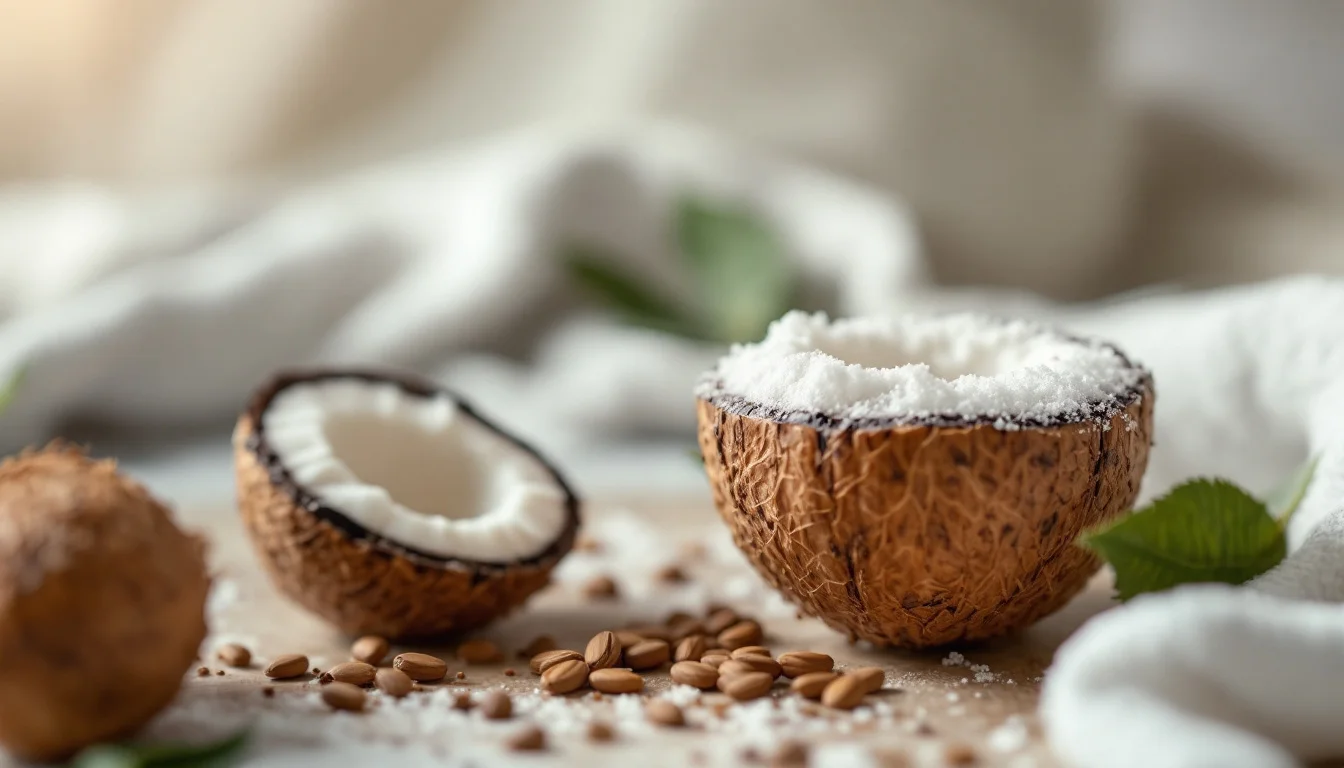
Long hailed as the ultimate holy grail of minimalist beauty routines, coconut oil holds a somewhat paradoxical status. It often embodies the ideal natural skincare ingredient, prized for its simplicity and enveloping texture. Yet, its use raises serious concerns when applied to delicate or blemish-prone areas.
Beyond its reassuringly natural image, the efficacy of this ingredient doesn't rely on some universal botanical magic, but rather on strict lipid mechanics. Understanding its chemical behavior allows you to make confident, informed choices to keep your skin happy and comfortable.
Rather than blindly slathering on this rich oil for every skincare need, the key is to pinpoint exactly where its heavy nature truly shines. While it excels at protecting the skin barrier from environmental aggressors, it can conversely disrupt the balance of your face by acting as an occlusive trap.
Key Takeaways
- Follicular Risk: On the historical comedogenicity scale, coconut oil scores around a 4 out of 5. However, since this scale relies on an animal model (rabbit ears), human results can vary. Balms with a high concentration of coconut oil still inherit this potential risk. When used as a leave-on facial treatment, it tends to encourage pore-clogging by interacting with sebum and keratin.
- Impact on Fungal Acne: Beyond classic comedonal acne, the link between coconut oil and Malassezia folliculitis (fungal acne) is more nuanced than it simply acting as "fuel" for the condition. While its occlusive effect and certain lipids can aggravate the issue, the lauric acid it contains actually shows in vitro antifungal activity against specific strains of this yeast. Still, caution is highly advised for those affected.
- Body Care: For the majority of the body (dry shins, rough elbows, cracked heels, hands), clogged pores aren't a major concern. It effectively softens these areas and locks in moisture.
The Chemistry of Occlusion: Why is Coconut Oil Ideal for the Body?
To understand the true benefits of a coconut oil balm, we have to look at its core composition. This oil is made up of roughly 90% saturated fatty acids, primarily lauric, myristic, and palmitic acids. This dense molecular architecture explains why the ingredient remains solid at room temperature and melts beautifully upon contact with body heat.
When it comes to skin, virgin (unrefined) cold-pressed coconut oil is often touted for its natural aroma and preserved antioxidants, though the actual clinical difference in topical use varies. Refined coconut oil, on the other hand, is highly valued in cosmetics because it is odorless and has a slightly higher melting point, making it easier to formulate.
How Does this Physical Protective Barrier Work?
This wealth of fatty acids gives coconut oil a very specific superpower: occlusion. As an occlusive oil, it doesn't directly deliver water to your cells. Instead, its job is to form a protective film over the surface of the epidermis. It seals in the moisture already present in the skin, preventing transepidermal water loss while deeply softening dry, rough patches.
Where Should You Apply this Lipid Seal?
This mechanism is most useful on specific topographical areas. On the body, the main skincare goal is to maintain suppleness against the friction of clothing or temperature fluctuations. When applied to elbows, hands, heels, or shins, a coconut balm proves incredibly beneficial. In these areas, the density of sebaceous follicles is low, virtually eliminating the risk of clogged pores. Occlusion then becomes a tool for daily comfort, offering an immediate sense of relief and repair.
Why Does Coconut Oil Clog Facial Pores?
While the occlusive mechanism is perfectly suited for cracked heels, it becomes problematic on the face. Coconut oil carries a high comedogenic risk, demonstrating a strong tendency to clog pores.
Why is its Immediate Comfort Deceptive?
It's crucial to separate two concepts frequently confused in the beauty world: immediate tolerance and pore-clogging risk. Coconut oil has an extremely low risk of irritation (rated 1/5 by ScanSkinAI). Upon application, it feels incredibly soothing, causing no redness or heat. This instant comfort misleads many users, prompting them to slather it on their face under the assumption that their skin tolerates it perfectly.
When Do the First Signs of Clogging Appear?
The main drawback of coconut oil lies in its silent, delayed action. Its lipid components interact with natural sebum and dead skin cells inside the follicles, slowly promoting the formation of blockages. Even people who aren't acne-prone often develop blackheads and small breakouts after a few weeks of using it on their face. This delayed reaction means a one-day trial is essentially useless. A patch test should be done on a small, discreet area (like along the jawline), once a day for several days, before even considering a full-face application. Using this balm as a leave-on overnight treatment guarantees a lipid buildup that your morning cleanse usually won't be able to wash away.
The Antibacterial Mirage: Does Coconut Oil Promote Fungal Acne?
Coconut oil's reputation in the natural skincare realm is marked by a major disconnect between lab results and the biological reality of human skin. This contradiction largely revolves around the properties of its star component: lauric acid.
Is Lauric Acid Actually Purifying for the Skin?
On one hand, in vitro data seems promising: some sources state that research confirms antimicrobial activity linked to coconut oil's lauric acid content. However, other formulators and brands explicitly reject this extrapolation, arguing that leaping from Petri dish lab studies to actual therapeutic effects on complex, living skin is a stretch. Both viewpoints exist within available literature, meaning this claim should be approached with caution.
Despite its undeniable richness in lauric acid, coconut oil isn't championed as an antibacterial or medicinal ingredient across the board by industry experts. A hydrating occlusive agent doesn't magically become a clinical treatment simply by virtue of its plant-based origins.
Why is the Link to Fungal Acne so Complex?
Even more concerning, the notion that coconut oil is a universal cure-all for acne masks genuine dermatological risks. The primary danger of this ingredient is actually triggering or worsening acne breakouts. While this is often classic comedonal acne caused by physical obstruction, the issue of fungal acne (Malassezia folliculitis) is much more complex and highly debated.
Far from simply being an all-you-can-eat buffet for the Malassezia yeast, the relationship is nuanced. While lauric acid demonstrates in vitro antifungal properties against certain strains of Malassezia (notably Malassezia furfur), slathering on a highly occlusive fat, combined with other lipid components, can create a breeding ground that exacerbates these conditions. Using this balm on a face prone to small, textured bumps therefore requires utmost caution. Those dealing with active fungal acne should carefully reconsider using it, acknowledging that the mirage of a "purifying" balm must give way to informed, targeted skincare decisions.
What are the Alternatives to Coconut Oil in Cosmetics?
Given the complexity of cosmetic formulas, spotting coconut oil requires a keen eye. This ingredient and its derivatives are heavily featured in body lotions, hair masks, lip balms, makeup removers, and soaps. On an international INCI list, spotting cocos nucifera oil near the very top indicates a high concentration.
How Does Contact Time Affect the Skin?
Your application method drastically alters the risk profile. While leave-on application (like a night balm) is ill-advised for the face, using coconut oil as a wash-off cleanser poses significantly fewer problems, as the plug simply doesn't have enough time to form inside the follicle.
Frequently Asked Questions (FAQ): Common Myths About Coconut Oil
Can Coconut Oil Replace My Natural Sunscreen?
No, absolutely not. It is vital to remember that coconut oil does not protect against the sun; it has no significant SPF. It should never be used as sun protection, as it will not prevent UV damage.
Should I Avoid It If I Have a Tree Nut Allergy?
Cross-reactivity is a common concern, but coconut oil is generally very non-irritating, and a true topical allergy to coconut remains rare. Furthermore, although coconuts are botanically distinct, rare cases of cross-reactivity with certain tree nuts (notably cashews) have been reported by allergists. When in doubt, it is highly recommended to consult a doctor or an allergist before incorporating it into your routine.
Conclusion: Should You Give Up Coconut Oil Balms?
A rigorous analysis of coconut oil marks a much-needed evolution in how we approach skincare. The outdated paradigm that "natural" means "good for everything" is fading, making way for a true map of the skin's needs. We shouldn't be moisturizing the thin skin of our forehead with the same heavy lipids we use to soften a rough elbow. By accepting that occlusion is a fantastic ally for the body but a heavy burden for facial pores, consumers can break free from sweeping marketing claims. Instead, they can build a precise, comfortable routine that is genuinely tailored to every unique zone of their anatomy.