Mango Butter: The Biomimetic Emollient That Restructures the Skin Barrier
Modern cosmetics are shifting towards skincare that respects and supports the epidermis's natural functions. Rather than layering inert moisturizers on the surface, today's scientific approach favors ingredients capable of interacting with human biology. Among these, mango butter stands out due to its remarkable structural affinity with our skin.
Native to Asia and belonging to the Anacardiaceae family, the mango tree (Mangifera indica) is primarily cultivated for its fruit, but a highly prized ingredient lies hidden deep within its pit. Far from the reductive image of a simple tropical treat or a DIY beauty hack, it is a highly functional active ingredient whose properties have been meticulously studied. This plant-based emollient helps protect the skin's shield against daily environmental stressors.
Key Takeaways
- Mechanical extraction: An ingredient obtained by cold-pressing the kernel located at the heart of the fruit.
- Biomimetic cement: A lipid structure that mimics the skin's natural barrier.
- Antioxidant profile: Contains lipophilic antioxidants that help fight free radicals and support elasticity.
- Non-comedogenic: A composition described as respecting the respiratory cycle of skin pores, though individual variability is possible.
From Kernel to Emollient: Extracting a Raw Active Ingredient
The ultimate quality of any dermatological skincare product relies heavily on how its raw materials are sourced. In this case, mango butter is a fat obtained by cold-pressing the kernel (the seed) found inside the hard pit of the mango fruit. In fact, the ingredient's INCI name is Mangifera indica (Mango) Seed Butter, confirming that the source is the seed itself, rather than the pit as a whole. This mechanical extraction process is crucial: it allows plant lipids to be harvested without chemical solvents or extreme temperatures. By avoiding industrial heating, the integrity of the active molecules essential for skin nutrition is preserved.
A Thermoregulating Formulation
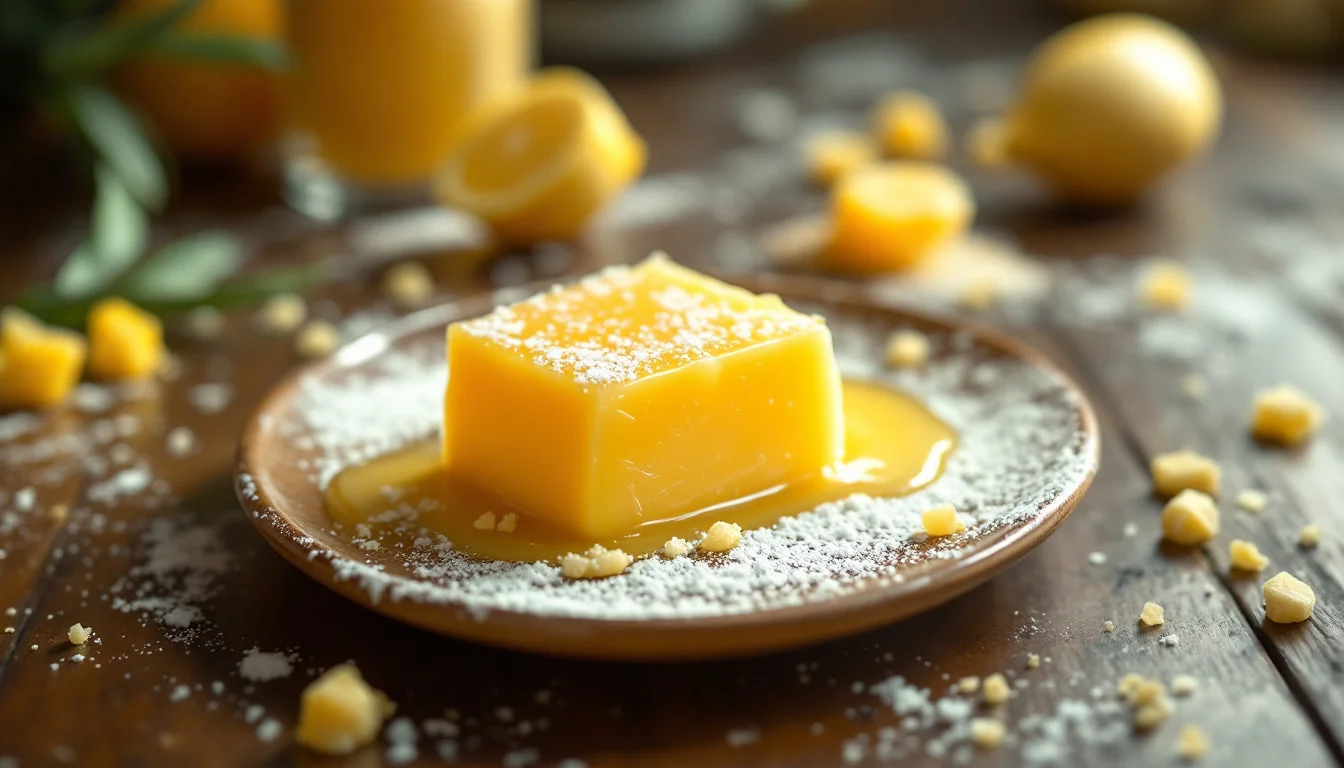
What sets this ingredient apart is its physical behavior. Mango butter has a semi-solid texture at room temperature but melts upon contact with the skin, as its melting point generally lies between 32 °C and 42 °C. This thermoreactive characteristic ensures a silky-smooth application.
In practical terms, the product maintains a stable form in its container but spreads fluidly the moment it meets body heat. This melting ability makes it perfect for massaging into the skin and optimizes absorption without leaving a heavy residue or an unpleasant sticky film. Its creamy texture, much like that of shea butter, makes mango butter a versatile ingredient, widely used for both skincare and haircare.
Biological Affinity: How Mango Butter Mimics Our Skin Barrier
To fully grasp the efficacy of this botanical active, we must look at how each sub-family of plant lipids manages to replicate the fundamental physiological components of the human epidermis.
Integration Into the Stratum Corneum
The outermost layer of our epidermis, the stratum corneum, functions like a microscopic wall whose structural integrity relies on high-quality lipid mortar. The saturated fatty acids in mango butter help soothe the skin and maintain its architecture. Their composition closely mirrors that of the stratum corneum's own lipids, allowing them to seamlessly integrate and act as an intercellular cement. They ensure optimal tissue cohesion and prevent the skin from becoming fragile. This reconstructive ability makes such skincare highly recommended for atopic skin types, which naturally lack lipids.
Supporting the Hydrolipidic Film
Directly on top of this protective wall rests a very fine natural emulsion that defends us against external aggressors. At this superficial defense level, the unsaturated fatty acids in mango butter play a key role in restoring the skin's lipid barrier; the oleic acid (omega-9) it contains is naturally present in our hydrolipidic film. This lipid affinity enables the skin to easily assimilate the ingredient, recreating a supple shield that works in harmony with our own physiology. This action is invaluable in helping the skin replenish its lipid composition, particularly after prolonged exposure to the sun or urban pollution.
Beyond Hydration: Protective Mechanisms of Action
As a lipid-rich emollient, mango butter softens and moisturizes dry skin. Today, this fundamental mechanism is widely supported by expert literature exploring its protective effects.
Halting Invisible Dehydration
One of the main challenges of proper hydration is not merely providing water, but successfully locking it within the tissues. The topical application of mango butter helps restore moisture by forming a protective lipid film on the surface. According to a study published in the Journal of Oleo Science (as cited by the brand Onérique), the fatty acids provided by this butter contribute to reducing transepidermal water loss. This gentle occlusive mechanism acts like a breathable blanket: it minimizes evaporation without hindering the epidermis's respiratory functions.
A Soothing Effect for Dry Skin
Dermatological comfort relies on managing skin dryness. In addition to its softening action, this butter helps soothe the skin thanks to the anti-inflammatory properties of its phytosterols. While all the precise mechanisms of these molecules are not yet fully understood and remain the subject of ongoing research, applying this emollient brings a sense of relief to tight-feeling skin, helping to calm itchiness and soothe certain types of redness. This potential is further enhanced by an overall protective action: a study from the Journal of Cosmetic Science highlights that mango extracts exhibit significant antioxidant activity, primarily due to various protective antioxidant compounds.
Mango Butter vs. Mango Oil: What's the Difference on the Label?
When decoding an ingredient list, it is not uncommon to notice some semantic variation regarding mango kernel extract. The use of the terms "butter" or "oil" can sometimes vary depending on suppliers or laboratories.
The Impact of Temperature on Terminology
The distinction between these two names often comes down to the material's physical state. As mentioned earlier, the raw ingredient remains semi-solid at room temperature. Many brands logically use the term "butter" to describe this fat when it is set at cold temperatures. Others might refer to it as an "oil" when discussing liquefied fractions. Strictly speaking, the lipid profile remains identical. However, it is worth noting that some sources use the two terms interchangeably, while others draw a line between butter (the semi-solid fat from the seeds) and oil (a more fluid preparation); both usages coexist within professional literature.
Is Mango Butter Non-Comedogenic?
The rich texture of the product often raises concerns about it being too heavy for blemish-prone faces. Mango butter is commonly described as non-comedogenic: it is said to adapt to different skin types and soothe irritations without clogging pores. This claim, frequently echoed by mainstream health websites, lacks the backing of robust clinical studies and must be qualified depending on skin type and the final product formulation. Therefore, incorporating this active into a facial skincare routine is a viable option, provided you pay close attention to your individual tolerance. As with any natural ingredient, botanical extracts can vary; it is always recommended to perform a patch test on the inside of your elbow before using it for the first time to rule out any risk of an allergic reaction.
Frequently Asked Questions (FAQ)
Will the product turn rancid quickly in its jar?
Mango butter boasts good oxidative stability. This allows you to safely store your skincare product in the bathroom without worrying about its properties degrading rapidly.
Should the product be kept in the refrigerator?
No, this precaution is generally unnecessary. Moreover, exposure to overly cold temperatures would cause the butter to solidify excessively, making it difficult to scoop out. Simply keeping the product away from direct sunlight and strong heat sources is enough to preserve its texture.
Conclusion
The skincare industry is undergoing an evolution by turning its attention to organic elements that have sometimes been overlooked. The mango kernel, often viewed as a mere byproduct of the food industry, has now emerged as a valuable raw material. This shift toward circular cosmetics proves that it is entirely possible to upcycle agricultural byproducts into active ingredients that benefit and support the skin.